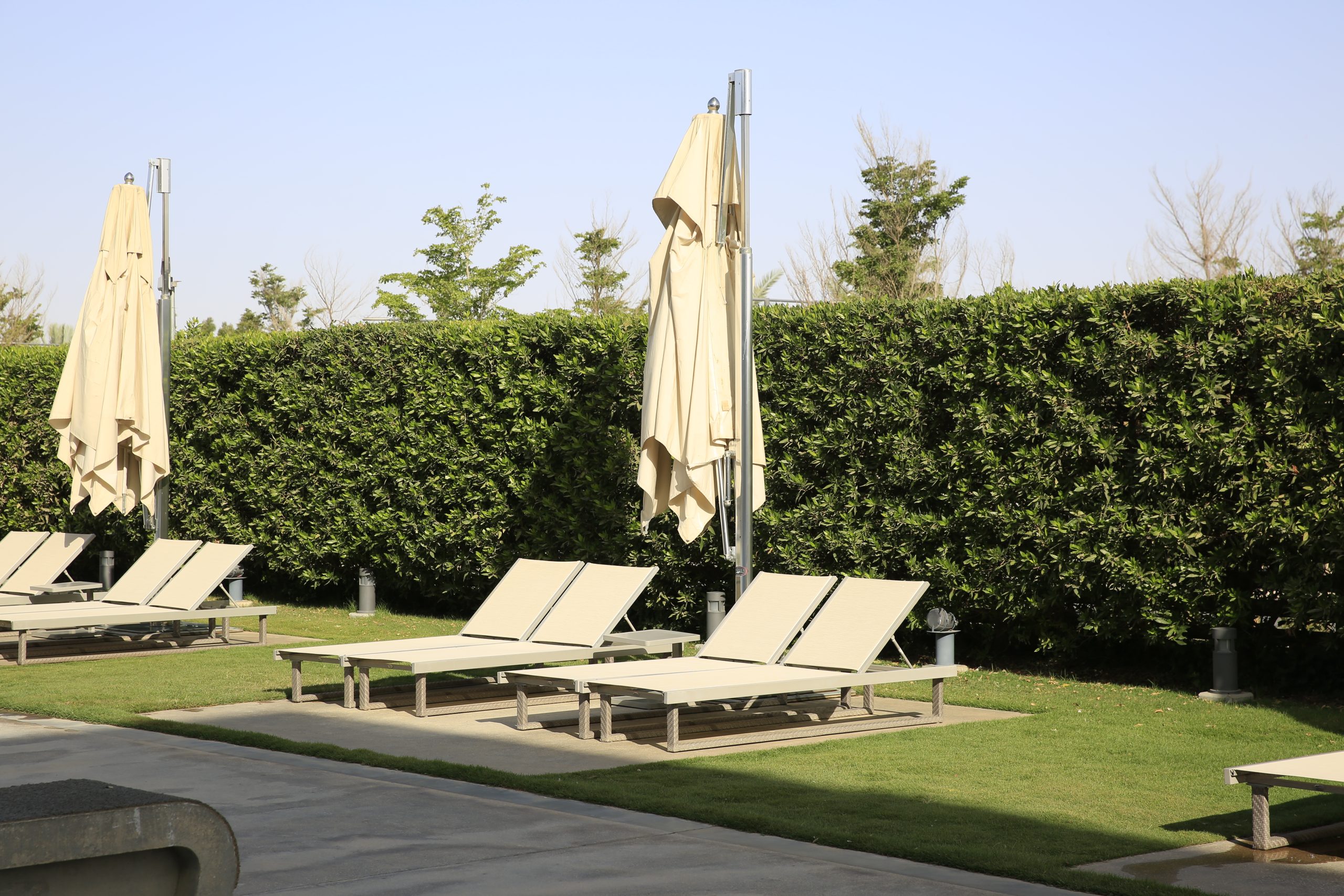
Few landscaping questions come up as often as this one. With water conservation a national priority and summer temperatures that challenge even the toughest natural lawns, artificial grass has become one of the most requested features in Saudi gardens. But is it the right choice for your property?
The honest answer: it depends on how you plan to use the space. Below, we set out where artificial turf excels in the Kingdom’s climate, where natural grass still wins, and what to check before you invest.
Why Artificial Grass Is So Popular in the Kingdom
- Dramatic water savings: a synthetic lawn needs no irrigation, a major advantage where every cubic meter of water counts.
- Minimal maintenance: no mowing, fertilizing, or reseeding; occasional brushing and rinsing keeps it fresh.
- Year-round green: it stays uniformly green through the hottest months, when natural lawns are most stressed.
- Durability: quality turf stands up to heavy foot traffic, children’s play, and pets.
- Clean surfaces: no mud, fewer pests, and less dust tracked indoors.
The Considerations Nobody Should Skip
Surface heat in summer
Artificial grass absorbs heat, and in direct midsummer sun the surface can become uncomfortably hot to walk on barefoot. Placement matters: shaded areas, pergola-covered courtyards, and zones used mainly in mornings and evenings perform far better. Lighter-colored, heat-reflective products and a quick rinse before use also help.
Upfront investment
Quality artificial turf costs more to install than seeding or sodding a natural lawn. The saving comes later, through years of avoided water, mowing, and maintenance costs. Our landscaping cost guide covers how to weigh installation cost against lifetime cost.
Drainage and base preparation
A synthetic lawn is only as good as the base beneath it. Proper sub-base compaction and drainage design prevent water pooling and extend the turf’s life. This is where professional landscape construction makes the biggest difference.
Product quality varies widely
Pile height, density, UV stabilization, and backing quality vary enormously between products. UV-stabilized turf is essential in the Kingdom; cheaper products fade and degrade quickly under intense sun.
Artificial vs Natural: A Quick Comparison
- Water use: artificial needs none; natural needs regular irrigation, especially in summer.
- Maintenance: artificial needs occasional brushing and rinsing; natural needs mowing, fertilizing, aeration, and pest control.
- Summer surface temperature: artificial can get hot in direct sun; natural stays cooler underfoot.
- Appearance: artificial stays uniform year-round; natural is lush when healthy, with seasonal variation.
- Upfront cost: higher for artificial; lower to establish for natural.
- Lifetime cost: lower for artificial over 8 to 15 years; natural carries ongoing water and care costs.
- Environment: artificial saves water but offers no cooling or habitat value; natural cools its surroundings and supports biodiversity.
Where Artificial Grass Works Best
- Rooftop gardens and terraces where soil depth and irrigation are limited.
- Pool surrounds: no mud, no clippings in the water, excellent drainage.
- Children’s play areas and pet zones that need a durable, clean surface.
- Shaded courtyards where natural grass struggles for light.
- High-traffic strips and narrow side yards that are difficult to mow and irrigate.
Where Natural Grass Is Still the Better Choice
Large open lawns used for gatherings on summer days, areas where surface cooling matters, and projects with strong sustainability or biodiversity goals often favor natural turf, ideally warm-season varieties like paspalum or bermuda with an efficient irrigation system. Many of our most successful projects combine both: natural grass in feature areas, artificial turf in functional zones, kept in top condition through our maintenance contracts.
Frequently Asked Questions
How long does artificial grass last in Saudi Arabia?
Quality UV-stabilized turf, professionally installed, typically lasts 8 to 15 years depending on traffic and exposure.
Does artificial grass need any maintenance?
Yes, a little: periodic brushing to keep fibers upright, rinsing to remove dust, and prompt removal of debris. It is a fraction of the effort a natural lawn requires.
Is artificial grass safe for children and pets?
Quality certified products are safe. For play areas, ask about shock-absorbing underlay and lead-free certification.
Related Guides
- When to Plant in Saudi Arabia: The Autumn Planting Calendar
- Resort Style Pool Landscaping in Saudi Arabia
- How to Design a Low Maintenance Garden in Saudi Arabia
- Landscape Maintenance Contracts in Saudi Arabia
Get the Right Lawn for Your Property
AALICO designs and installs both natural and artificial lawns across Saudi Arabia, and our team will give you an honest recommendation based on how you use your space. Contact us for a consultation and a tailored proposal.